This article contains Amazon affiliate links. If you buy through them, I may earn a small commission at no extra cost to you. Amazonのアソシエイトとして、nihonshouhin.comは適格販売により収入を得ています。
When I was writing the air purifier article a few weeks ago, I tried to find out who actually manufactures the filter media inside the Daikin MC556A-W I recommended.
Daikin doesn’t say on the box. The manual doesn’t say. The filter itself has a batch code printed along one edge, nothing else.
It took longer than it should have. And what I found was more interesting than I expected.
The filter is what the machine does. So why don’t brands talk about it?
Every air purifier spec sheet leads with filter specs. HEPA, 99.97%, 0.3 micrometers, 10-year life. The filter is the core function. But when you actually dig into who manufactures the filter media itself, the major appliance brands are conspicuously quiet.
This isn’t unusual in Japanese manufacturing. Toyota doesn’t forge its own engine valves. Panasonic doesn’t wind its own motor coils. Complex consumer products are typically assembled from components made by specialist suppliers who operate below the visible brand.
Air purifier filter media is one of those tiers. The companies making the actual fibrous material have been doing it, in some cases, longer than the appliance brands they supply.
ROKI and the car filter company that ended up in your living room
ROKI Co., Ltd. was founded in April 1958 in Hamamatsu, Shizuoka Prefecture, originally as Toyo Roki Mfg. Co., Ltd. They renamed to ROKI in 2008.
Their core business is automotive filtration. Air cleaners, oil filters, intake manifolds, carbon canisters, fuel systems. Their customer list runs through Honda, Toyota, Mazda, Subaru, GM, Nissan, Ducati, and Yamaha Motor.
One name on that customer list is different from the others: Panasonic Corporation (Living Appliances and Solutions Company).
That’s the division that makes air purifiers.
So ROKI, a company built around engine air filters and oil filtration systems, also supplies Panasonic’s home appliance business. The engineering logic is cleaner than it sounds. A cabin air filter in a car and a HEPA filter in an air purifier work on similar core principles: move air through a fibrous medium, capture particles, keep pressure drop low. The material science overlaps enough that automotive filter specialists have a real edge in residential filtration too.
There’s a reason automotive filter expertise transfers to residential use so cleanly. Engine air filters operate in genuinely harsh conditions: temperature swings from below freezing to 100℃ under the hood, high vibration, diesel particulate, road dust, humidity cycling. A filter that holds up reliably in that environment is engineered to stricter standards than anything needed for a living room. When ROKI engineers a residential HEPA element, they’re working well within the performance envelope their automotive testing infrastructure already handles. The tolerance stack is in their favor.
ROKI runs a group of around 4,000 employees with subsidiaries across the US, Mexico, Thailand, Indonesia, Vietnam, China, Korea, Romania, and India. They have R&D facilities in Hiroshima as well as their main Hamamatsu operations. In 2021 they started manufacturing high-performance masks in Japan during the mask shortage period, which is the same nonwoven filtration process applied to yet another end use.
Japan Vilene: the German-owned company making Japan’s filter fabric
If ROKI is the filter maker, Japan Vilene (日本バイリーン) is closer to the company making the fabric the filters are made from.
Japan Vilene was founded in 1960 as a three-way joint venture. Carl Freudenberg, a German nonwoven manufacturer with roots in the 1800s, provided the technology. The Japanese partners were Dainippon Ink and Chemicals (now DIC Corporation) and Toyo Rayon, which became Toray Industries. Germany brought the process know-how. Japan brought the manufacturing capacity.
Nonwoven fabrics are made by bonding or mechanically entangling fibers without weaving them. The washable pre-filter on your air purifier, the outer layer that catches hair and large particles before the HEPA, is almost certainly a nonwoven. The substrate layer of many HEPA filters is also a glass fiber or synthetic fiber nonwoven mat, treated with electrostatic charge or other processes after formation.
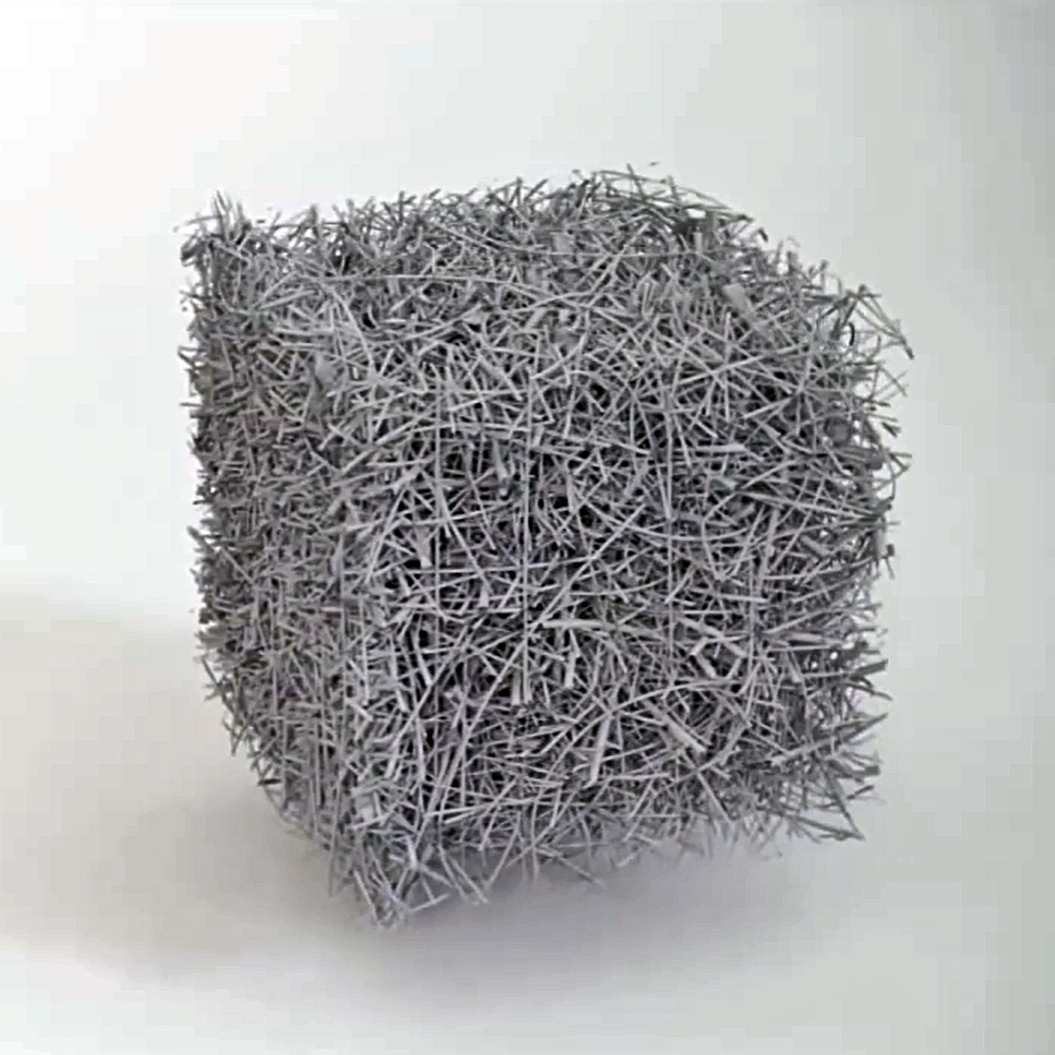
Japan Vilene supplies into automotive (seat padding, cabin air filter media), medical (surgical gowns, wound dressings), electrical insulation, HVAC systems, and industrial applications. They were publicly listed on the Tokyo Stock Exchange for decades.
In 2015 they were delisted and became a joint subsidiary: Freudenberg SE at 75%, Toray Industries at 25%. Then Freudenberg acquired Toray’s remaining stake and now owns Japan Vilene outright.
The company controlling a significant portion of Japan’s filter substrate supply chain is German. The factories are still in Japan, the staff is still Japanese, but ownership moved to Weinheim in 2015.
Yamashin Filter: the 1956 Saga company that solved the pressure drop problem
Yamashin Filter (ヤマシンフィルタ) was founded in 1956 in Saga Prefecture, on the island of Kyushu. That makes them older than Sharp’s home appliance business by a meaningful margin.
They spent most of their history making industrial hydraulic and air filters. The company’s consumer visibility was essentially zero.
Then in 2017 they released the YAMASHIN NANO FILTER®, a material built using an improved melt-blow nanofiber process. In melt-blow manufacturing, molten polymer is forced through fine nozzles by high-velocity hot air, creating fibers at nanometer-scale diameters. Those fibers are then collected into a dense mat that catches particles far smaller than conventional filter media at the same thickness.
The result: MERV14 certification (which sits above standard residential HEPA in the capture grading system), 96% average collection rate against PM2.5, and roughly 30% lower pressure drop than conventional filters at the same efficiency level.
That pressure drop number is the one that matters for air purifiers specifically. Every filter adds resistance to airflow. The fan works harder against a denser filter. More resistance means more noise at a given fan speed and higher electricity draw. A filter that captures the same proportion of PM2.5 but lets air move through more freely is a real engineering improvement, not just a spec sheet upgrade.
Yamashin holds an international patent on the melt-blow process. Production runs out of Saga. Their group company, AQC Corporation, sells consumer products under the NanoWHELP® brand name. If you see a residential air purifier marketing ‘nanofiber HEPA’ technology, Yamashin’s supply chain is plausibly involved.
The Daikin exception: they bought Japan’s #1 HEPA manufacturer
Now the part of the supply chain story I didn’t expect when I started digging.
Nippon Muki (日本無機) is Japan’s market-leading HEPA filter manufacturer. Their original core product was developed for Japan’s nuclear-related industries in the postwar period. The requirement: capture radioactive particulate at 0.3 micrometers at 99.97% efficiency, with no failure modes. That same specification turned out to be exactly what hospitals needed for surgical theaters and what semiconductor fabs needed for chip-level cleanrooms. The residential air purifier market came later, but the spec fit.
Daikin acquired Nippon Muki.
This is confirmed in industry coverage and Daikin’s own corporate documentation. Daikin’s stated goal in the acquisition was to become the leading supplier of air filters in Japan. They already had the filter business division. Adding Nippon Muki’s manufacturing capacity and market share gave them coverage from consumer residential all the way to semiconductor cleanroom.
When you buy a Daikin air purifier, the filter has organizational continuity with Japan’s most capable filter engineering group. The TAFU filter in the MC556A-W (Tough Ageless Fit Utility, an electrostatic HEPA) is the engineering output of a company that now owns Nippon Muki’s decades of HEPA development work and manufacturing know-how.
There’s additional history here. In 1995, Daikin was the first company in the world to replace glass fiber in HEPA filters with PTFE, polytetrafluoroethylene, nanofibers. PTFE HEPA doesn’t shed glass particles into the filtered airstream, which matters enormously in semiconductor manufacturing where a single stray fiber at the wrong moment can destroy an entire wafer. Daikin developed and commercialized this for industrial cleanrooms. The consumer-grade filter in your living room sits downstream of decades of that engineering work.
No other major consumer air purifier brand in Japan has this depth of in-house filter R&D.
Why 10 years is actually possible now
Twenty years ago, a residential HEPA filter needing annual replacement was completely normal. The glass fiber mat degraded and pressure drop climbed as it clogged. Any electrostatic charge on charged filters decayed within a year or two of thermal cycling.
The shift toward 10-year claimed lifetimes in Japanese consumer appliances is a materials science story.
Electrostatic HEPA works by embedding a permanent charge in the filter fibers. Particles are attracted to the charged fibers even before they physically contact them, which lets the filter catch more at lower material density. The problem with first-generation electrostatic filters was that the charge was easy to neutralize: humidity, heat cycling, airflow abrasion, and the gradual buildup of captured particles all degraded it. By the mid-2010s, the fiber chemistry and charge-embedding techniques had improved enough that manufacturers could credibly claim decade-long retention.
Yamashin Filter’s nanofiber approach takes a different path. Finer fibers create more surface area per gram of material. More surface area means higher capture probability for each particle moving through the mat. The 30% lower pressure drop they claim comes from being able to use a physically thinner or less dense mat to achieve the same capture efficiency, because the individual fibers are doing more work per unit of area.
Both approaches depend on the filter companies, not the appliance brands, having solved difficult materials problems over decades. The 10-year figure on the Daikin box is downstream of Nippon Muki’s filter engineering. The nanofiber claims on newer machines are downstream of Yamashin’s 2017 patent work.
JIS B 9855 is the Japanese industrial standard governing air purifier performance claims, including the tatami-mat room coverage ratings. It sets minimum requirements for how machines are tested. But the standard doesn’t certify filter lifespan directly. The 10-year claims are the manufacturer’s, based on their own internal testing. For Daikin, that internal testing is backed by the same engineering organization that builds HEPA filters for pharmaceutical manufacturers where filter failure is not an acceptable outcome.
For a brand that just sources filter media and puts its name on it, the internal testing is less reassuring.
What this means when you’re buying replacement filters
Eventually your machine’s filter life will run out, even if it takes 10 years. Replacement filters for Daikin, Sharp, and Panasonic are available on Amazon Japan and Rakuten from third-party suppliers, sometimes at 30-50% of the official brand price.
The question is what material you’re getting.
For Daikin specifically, the case for genuine replacement parts is stronger than it is for most brands. Their filter engineering is real, and the TAFU electrostatic charge retention over a decade is something that’s hard to replicate with commodity filter media. Third-party HEPA for Daikin slots often use standard glass fiber media that technically passes HEPA classification but won’t maintain the same electrostatic performance over the filter’s claimed lifetime.
For Sharp and Panasonic, the third-party replacement market is more developed and the quality variance is smaller. The pre-filter on any brand (the washable outer layer) is almost always fine as third-party or even as a generic nonwoven cut to size. The HEPA core is where you want to be more careful.
The pre-filter question: wash it every two weeks with cold water, let it dry fully before putting it back. This is in the manual, but people skip it. A clogged pre-filter makes the HEPA work harder than it needs to and shortens its effective life.
The bigger ものづくり picture
Nippon Muki (now Daikin Group), Japan Vilene (now Freudenberg Group), Yamashin Filter in Saga, ROKI in Hamamatsu. These are the companies doing the material science work that makes a ¥36,000 air purifier perform the way its spec sheet claims.
None of them have consumer name recognition. None of them sell in Yodobashi Camera. Their facilities are in industrial zones in Tokyo, Kanagawa, Saga, and Shizuoka.
And this structure, the invisible specialist supply tier under the consumer brands, is one of the things that’s actually hard to replicate when you try to manufacture-copy a Japanese appliance. The spec sheet is public. The filter fiber diameter, the electrostatic charge parameters, the melt-blow process control that Yamashin spent decades refining, the specific glass fiber formulations Nippon Muki developed for nuclear-grade applications: none of that is on the spec sheet. They’re embedded in the supplier relationships and manufacturing processes of companies that have been working on their specific piece of the problem since the 1950s and 60s.
Japan’s manufacturing towns, 大田区 in Tokyo and 東大阪 in Osaka, exist precisely because complex products need specialist component makers nearby. The Daikin engineers designing the Streamer discharge unit needed to be able to talk to filter engineers, not manage a six-week supply chain from overseas.
The 99.97% on the box is real. But it was earned by people whose names don’t appear anywhere on the packaging.
One practical thing this changes: if you ever want to understand how two air purifiers with identical HEPA specs perform differently in real use, the answer is usually in the filter supply chain and the fan engineering, not the brand logo. A Daikin at ¥36,600 and a generic import at ¥12,000 can both claim HEPA 99.97%. What they’re not equally claiming is 60 years of filter R&D, Nippon Muki’s engineering standards, or PTFE nanofibers developed for semiconductor manufacturing.
The spec sheet is the floor. The supply chain is what separates the floor from the ceiling.
Andrew is a mechanical engineer based in Japan. He writes about Japanese home appliances and the manufacturing ecosystem behind them at nihonshouhin.com.
Leave a Reply